Friday, October 15, 2010

Sustainable Development Weekly Updates Oct 08 - Oct 15 - Justmeans

All Electric Buses En Route To Sustainable Development - Robert Moskowitz

All-electric buses are coming to a bus stop near you -- or at least, nearer than ever before.

China has led the way in electric bus utilization for many years, but now bus companies in the U.S. are testing and accepting a variety of all-electric transit vehicles. The relatively sleek, smooth buses offer the potential to save vast sums of operating expenses over the typical bus' operating life.

One reason electric buses are now appearing on local streets in the U.S. is that their batteries can be charged in just a few minutes, instead of the hours required by older energy-storage technologies.

Post continues: http://www.justmeans.com/All-Electric-Buses-En-Route-Sustainable-Development/33646.html

Sustainable Development Efforts Yield World's First Zero-Carbon City - Robert Moskowitz
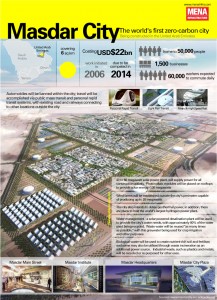
Masdar City, the world's only zero-carbon city, is still on track to be built in Abu Dhabi, despite massive changes in the world's economy.

The original project was projected to cost some $22 billion, and to be completed in 2016. More recent reviews considering the financial crisis indicate the advanced residential and industrial cluster may not be completed until 2020 or even 2025. However, the cityi's first phase is still on track to be ready for occupancy by 2015.

Post continues: http://www.justmeans.com/Sustainable-Development-Efforts-Yield-World-s-First-Zero-Carbon-City/34310.html

Financial Incentives for Sustainable Development - Robert Moskowitz
Although some have expired, a great many government tax incentives, credits and other financial rewards are still available for homeowners who wish to install some form of green energy system in their principal residence.*

These incentives are intended both to stimulate economic activity and reflect society's growing recognition of the potential dangers and problems caused by global climate change, dependence on foreign oil supplies, and other impending changes in our energy economy. Governments at the federal, state, and local levels are trying to incentivize their residents to install so-called "green" technology that does a better job of utilizing renewable energy sources and/or being more efficient in its use of energy, regardless of its source.

Post continues: http://www.justmeans.com/Financial-Incentives-for-Sustainable-Development/34321.html

Zinc Industry's CSR Initiative Helps Tackles Zinc Deficiency - Anna Dubuis

Zinc deficiency affects two billion people globally and contributes to the deaths of 450,000 children every year. Yet, just like other micronutrient deficiencies, it is often an invisible illness, and consequently as a public health issue it receives little attention. Zinc is an essential micronutrient for human health, helping to fight off illness, like malaria and diarrhoea, and is vital to children's cognitive development and learning.  When diets do not contain sufficient amounts of zinc, the consequences include lower birth weight, a decrease in cognitive ability and increased susceptibility to other diseases.

As a major contributor to over 800,000 deaths each year, what is equally as shocking is that the majority of these deaths are easily preventable with a simple zinc supplement. UNICEF is one of the many humanitarian organisations that are providing zinc and other micronutrient supplements to children in developing countries. Just a few extra milligrams of zinc every day can be the difference between life and death.

Post continues: http://www.justmeans.com/Zinc-Industry-s-CSR-Initiative-Helps-Tackles-Zinc-Deficiency/34456.html

Water Reclamation Center Opens To Boost Environmental Conservation - Robert Moskowitz
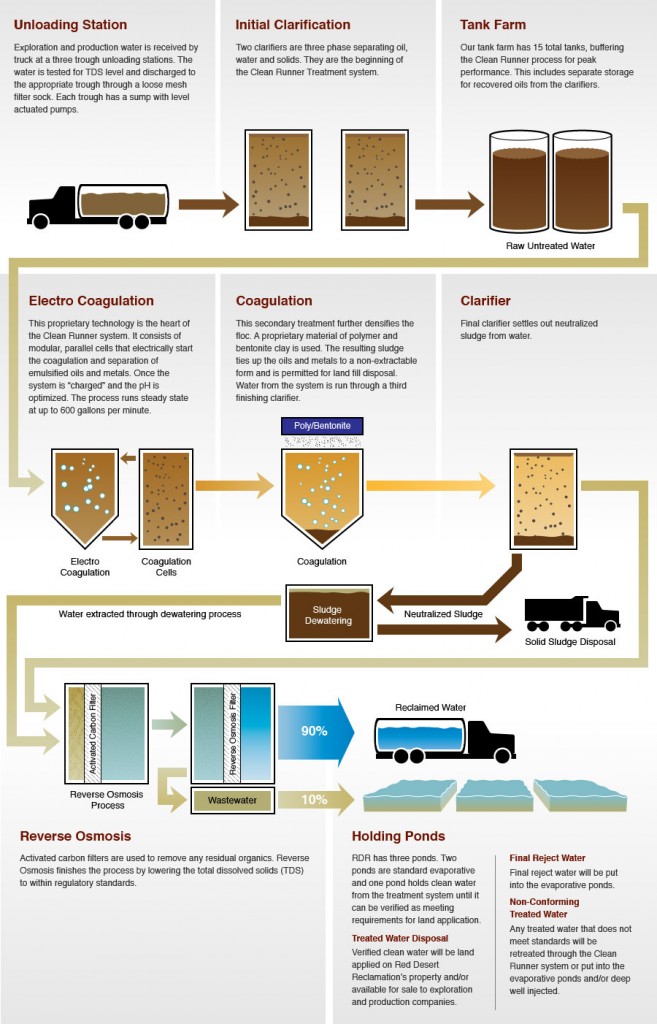
A gathering of Wyoming's finest were on hand October 6, 2010, to witness the official opening of the new Red Desert Water Reclamation (RDWR) center. Designed to reclaim water polluted by use within the oil and gas industry, the RDWR facility brings a significantly higher level of environmental sustainability to the state. RDWR is located less than two hours by truck from a large number of multiple oil- and gas-producing basins.
RDWR can treat approximately 20,000 barrels of water per day, using a chemical-free, low-cost technology to transform pollluted water that is currently lost through well-injection or evaporation methods into usable water that easily meets both U.S. Environmental Protection Agency and Wyoming's Department of Environmental Quality standards.

Incoming water is sorted on the basis of its Total Dissolved Solids, as much as 9000 parts per million (ppm), and isolated into tanks. It then passes through a system of clarifiers to remove suspended solids and floating organics, which are neutralized with a bentonite and polymer compound for disposal in a land fill. After clarification, the water goes through electro coagulation, flocculation and separation, and finally Reverse Osmosis. Fully cleaned, RDWR's reclaimed water can be used for irrigation or recycled for re-use in additional oil and gas production processes.

Post continues: http://www.justmeans.com/Water-Reclamation-Center-Opens-Boost-Environmental-Conservation/34487.html

Share and Enjoy:
Digg del.icio.us Technorati Stumbleupon Blinklist Reddit Furl Yahoo Spurl Simpy

Friday, October 8, 2010

Sustainable Development Weekly Updates - Justmeans

Energy Efficiency Expo Supports Sustainable Development. - Robert Moskowitz

A new kind of expo, the Energy Efficiency Expo, is coming to town. It's a newly organized trade fair showcasing products and services to help organizations reduce their energy consumption and become more energy-efficient, and it's scheduled to be held October 18-20, 2010, at the Gaylord Texan Convention Center in Grapevine, Texas (near Dallas).

"Energy Efficiency has become a key focus for business, government and institutional organizations," said David Webster, president of the new event's producer, Webcom Communications. "Attendees will be able to see and learn about the many new products and services available that can help them reduce energy consumption, lower their energy bills and improve their green footprint. Some will even discover new ways they can turn energy-efficiency capabilities into revenue-generation tools for their organization."

Post continues: http://www.justmeans.com/Energy-Efficiency-Expo-Supports-Sustainable-Development/33634.html

Sustainable Development: Cleaning up the Kitchen - Anna Dubuis

Last week, a new international alliance was launched to address the problems of inefficient cook stoves used in rural, poor households that are responsible for the deaths of almost 2 million people every year.

Exposure to smoke from traditional cook stoves and open fires kills an estimated 1.6 to 1.8 million women and children and causes countless more cases of pneumonia, lung cancer, emphysema and other diseases. According to the World Health Organisation, cooking smoke is responsible for more deaths than malaria.

Post continues: http://www.justmeans.com/Sustainable-Development-Cleaning-up-Kitchen/33576.html

Renewable Energy Sources in U.S. Power Generation Boost Environmental Conservation - Robert Moskowitz

According to the U.S. Energy Information Administration (EIA), biofuels, biomass, geothermal, hydroelectric, solar, and wind provided 11.14% of all domestic U.S. energy production during the first six months of 2010 - the latest time-frame for which data has been published.

This continues the steady growth trend for renewable energy sources in the U.S.

In fact, renewable energy sources powered 4.91% more BTUs (4.106 quadrillion) during the first six months of 2010, compared with the first six months of 2009, and 8.37% more BTUs than they provided during the first half of 2008.

Post continues: http://www.justmeans.com/Renewable-Energy-Sources-in-U-S-Power-Generation-Boost-Environmental-Conservation/33624.html

Sustainable Development Shown By World Largest Photovoltaic Plan - Robert Moskowitz

First Solar, a leading manufacturer of photovoltaic (PV) solar panels and provider of solar solutions, and Enbridge, a leader in the safe and reliable delivery of energy throughout North America and recognized as one of the Global 100 Most Sustainable Corporations in the World, have opened the 80-megawatt Sarnia Solar Project for commercial operation, allowing it to take its place as the largest operating photovoltaic power-generation facility in the world.

Post continues: http://www.justmeans.com/Sustainable-Development-Shown-By-World-Largest-Photovoltaic-Plan/33616.html

Share and Enjoy:
Digg del.icio.us Technorati Stumbleupon Blinklist Reddit Furl Yahoo Spurl Simpy

Tuesday, April 27, 2010

When was the last time you learned from a case study?

Knowledge sharing is critical – but how can we do it well for sustainable development?

A friend of mine who is working on enabling international businesses to become more sustainable was recently talking to a particularly successful business about the lessons that they had learned in the process of their work. They wanted to share those lessons with other businesses. Well, they said, we could write it up as a case study and distribute it in a newsletter or something to our partners. And my friend said, wait a second, when was the last time you learned and then implemented something that you learned from reading a case study? His colleague paused and thought about it. Never, he said.

Never! That’s a strong word. But I thought back to my own experience. When have I used the knowledge I’ve read in case studies from Africa to India that I have not been personally involved with or have not talked to/knew the people involved in them? Sometimes, I find inspiration from a good blog or a good article about a project, or I might remember an idea I’ve read while browsing through documents, but if I just read it and don’t fully engage with it, I don’t tend to learn much from it either. I can’t think of any either. Which suggests that case studies, in their traditional form, are often wasted attempts to share knowledge – and will lead to only more frustration of everyone wanting to present their case study but not learning from other people’s.

But we do learn from other people’s experiences. I am reminded of the work of the international development organization, The Hairou Commission. They work to organise and connect grassroots women’s organisations from around the world, focusing particularly on knowledge sharing in South-South partnerships. They have primary areas: health, agriculture, climate change, governance, etc. They bring women together to different conferences, colloquiums, and online forums, and other knowledge-sharing platforms to share each other’s stories. These are very powerful; women learn from one another and frequently count these experiences as some of the most important processes throughout their year. They are, in essence, sharing the ‘case studies’ of their lives.

So what’s the main difference? Besides gender, the main difference is person-to-person (even if it is online) listening and sharing versus reading someone else’s work - which rarely seems to readily apply to your reasonably different situation. Because that’s how learning happens: through listening, sharing, experiencing being heard, and really being in communication with another person. Which is why much of the ‘really good stuff’ at conferences happens in the hallways and over a glass of wine. It’s not just passing name cards around – it is the experience of being heard and listening. So go ahead and make your case study – but don’t assume that just propelling it into the universe will get you anywhere. Find the best times and places to bring it out and use it for real knowledge-creation for sustainable development – usually when people have the opportunity to really engage with it.


Photo credit:
amtamassage


Share and Enjoy:
Digg del.icio.us Technorati Stumbleupon Blinklist Reddit Furl Yahoo Spurl Simpy

Monday, April 26, 2010

Celebrating Sustainable Development - Celebrating ourselves

I had the pleasure of attending the Awards Dinner for Corporate Register this past week. I listened to corporate responsibility report-writers talk about what they do, and, in the end, celebrate one another's accomplishments. It reminded me of how rarely we take time to celebrate ourselves and our accomplishments.

Even in my own life, how often do I stop at the end of a project or even just a week and think, wow, that was really well done? I've For one of the organisations I work for, they are growing like crazy, but the leaders rarely feel they can take even a weekend off. They are just too busy. Burn out is high. For another organisation I work for, if the stress level's aren't shooting through the roof, then people are just really worn out; the 'leader' occaisionally looks like he is about to fall over. These are highly capable, very self-confident men doing work they believe in. To be fair, I think they do take time to celebrate - but not very often, and in general, they are celebrating other people.

And then there was Earth Day, in which we are asked to celebrate the single most important enabler of our existance - the earth itself. For me, that is a time when we do not celebrate things well. Truly celebrating the earth - for one thing, that must be done on a daily basis - and for another, Earth Day always seems, well, cheesy. It does not feel like it is truly a time of honoring our home. 'Happy Earth Day' hardly has the same ring as, say, 'Happy Thanksgiving' or 'Happy Birthday'.

I think many of us engaged in sustainable development are better at saying what is going wrong than what is going right. For the few of us who have managed to focus on positive visions, they tend to be 'in the future' instead of right here right now. What can I think of to celebrate in sustainable development? Well, I think we really are beginning to get somewhere in this field - especially if we don't hold too much attachment to what it is called. I think more and more people are coming to recognise its importance, more companies are practicing embedding environmental and social concerns in what they are doing, and more governments are recognising the imperative of acting, not just talking, on climate change. There are some great adaptation programs around the world. The voices from East and South East Asia are getting stronger, challenging previously dominant voices. Sometimes, that means good things for sustainable development. The green economy is growing. And Africa is changing - the change is too diverse to try to label as 'good' or 'bad' (and I'm not that close to God to be able to really know which one is which), but I believe that there is still much hope for the continent. And every day, we get another chance to work and play with others who are learning to live our shared lives a little closer to our vision and a little further from what used to be considered 'normal' - and that is something worth celebrating.

Share and Enjoy:
Digg del.icio.us Technorati Stumbleupon Blinklist Reddit Furl Yahoo Spurl Simpy

Tuesday, April 13, 2010

Business and Overseas Development: Connecting for sustainability?

Business has always been a key section of international development, though that has not always led to sustainable results. One might remember that international development's precursor was colonialism - which thrived in part because of the profit advantages to being able to obtain immensely valuable natural and human resources for almost nothing. Some of the larger 'development organisations' - not least the IMF and the World Bank - have been accused of opening the doors for Western businesses to enter into the developing world and continue that colonial trend - to the great social and environmental detriment of people and planet in the 'developing' world. Not too surprising that the business-development nexus is one fraught with tension - especially since many development actors (though usually not the larger ones) tend towards a certain skepticism of the benefits of 'private public partnerships' (PPP). Who is really profiting from those partnerships - the public-private elite, or the masses?

Yet in the past decade or so, international agencies from the US to the UK to Sweden have increasingly reached out to the private sector. It isn't just a variation of these aid agencies growing more neo-liberal; its also a recognition that a) business can add real value to development and b) that business is there - just as one can not ignore economics, nor can one ignore businesses (including multinational corporations). Working with governments isn't enough to reduce poverty. And as a report by the Business Civic Leadership Center pointed out, One of the signs of their presence - multinational corporations gave $3.5 billion to overseas development initiatives. If they were a country, they would be in the top 20 donors. It makes good sense for development to engage with these major actors - on multi-national, national and community levels, for both 'development' and 'business' reasons. Businesses affect pressing developmental issues, from worker safety and well being to environmental challenges to developing emerging markets in healthy directions, and include both global and national programmes. Development agencies act as strategic advisors and broker knowledge.

It's not an easy game to play for either side. Development agencies are numerous, fragmented and it is difficult for those in the field to know who is doing what, much less those coming in from outside. It is hard for businesses to know where responsibility and accountability lie. Many 'rules of the game' (especially around leveraging capital) are not developed - or contradictory. Most multi national companies don't work in one of the key priority areas - Africa. Despite these challenges, there are some success stories. USAID has leveraged over $9 bill with over 680 alliances to mobilize investments in sectors ranging from water to micro credit to agriculture. And of course, the micro-credit (and, growing very slowly, the micro-insurance) arenas are well known ways in which much has been done. There are international intentions (such as the UN Global Compact) which are providing a sandbox for figuring out what to do where. I'm not always sure how much is sustainable, and how much isn't. But I know that create sustainable development, both sides need to work together - and hopefully, to get a clearer sense of what is needed to both transform business and aid practices for sustainable development.

Share and Enjoy:
Digg del.icio.us Technorati Stumbleupon Blinklist Reddit Furl Yahoo Spurl Simpy

Wednesday, April 7, 2010

When one becomes dependent on fears of dependency

Social protection is, once again, becoming increasingly popular as a policy of sustainable international development. However, it still suffers from fears of dependency. Too often, policy makers are too dependent upon their fear of dependency.

Social protection is quickly becoming recognised as one of the most critical aspects of sustainable international development by those engaged in supporting poor countries and emerging markets to develop. Social protection - a dimension of the welfare state - gives support to people in need. Sounds broad? That's because it is. It can include everything from cash transfers to food support to waiving education fees. Even elements of corporate social responsibility could be seen as part of social protection (protecting society from abject poverty as can be brought on by the market forces and global changes) - though usually, social protection refers to government programmes. It generally includes social insurance, social assistance and labour market regulation. The basics of social protection form the basics of the UK's National Health System and the US's welfare-to-work programming.

Does social protection work? Sometimes. It needs to be well targeted, which requires a high level of knowledge of local contexts - something governments don't always have, much less donor agencies working in international development. During financial crises, those governments that have decent social protection programmes overall fare better, their people do not go into poverty as deeply or for so long, and the overall economy can improve faster. It also means that in times of crises, some structure already exists - the government does not have to start from scratch just as the world seems to be tumbling around it -it just strengthens and adds greater resources to what it already has.

Recently, social protection has become concerned not only with providing a more or less stable safety net, but a safety net that bounces back - so that when you land on it, you can get thrown back up to the next income level (hopefully above the minimal poverty line). That means social protection is becoming increasingly linked to overall economic growth agendas, and not simply seen as a 'net' that catches the 'poor' and the 'fallen'. Some call this process of moving from dependence to independence 'graduation'. I think of it as one of the core aspects of sustainable development. It's also becoming increasingly important for adaption to climate change - though to distinguish it from 'normal' social protection, it is referred to as 'Adaptive social protection'. Is there much difference? For people on the ground, probably not. For donors concerned with proving the 'additionality' of climate change funding - indeed it does!

But there is a great fear that governments have - a fear of dependency. They fear that people will just live on the social protection and not work to improve their condition on their own. And while there are many stories of such people, and I'm sure it is an element of it, the evidence suggests that, overall, people do try make an effort to move from dependence to independence. But the fear is so strong that governments are reluctant to put in place long term social protection policies. Perhaps it is the lingerings of Thatcher and Reagan that withdrew long term state support. Whatever the reason, the fear of dependency seems to outweigh the fear of deep poverty.

Certainly, social protection does need to be long term. If social protection is going to be linked to poverty reduction - and not just keeping people away from absolute desolute conditions - it needs to be part of a longer-term development which, I would argue, needs to be focused on keeping people out of poverty (aka pro-poor growth) - that's the only way forward for long term sustainable development.


Share and Enjoy:
Digg del.icio.us Technorati Stumbleupon Blinklist Reddit Furl Yahoo Spurl Simpy

Monday, April 5, 2010

Complexity and Development

In case you haven't noticed, complexity and chaos science has been movin' and shakin' the natural-scientific world for several decades, leading to fabulous advances in everything from climate science to the human genome project to molecular physics. It's been breaking down disciplinary boundaries and leading to some life-affirming images that grip the popular imagination, from the notion of the earth being one system (Lovelock's beloved 'Gaia theory') to the notion that the flapping of a butterfly's wings can shape a tornado - even the smallest action, in the right circumstances, can make a profound difference. It's a science where the phrase 'we don't know' is common normal - a far cry from much of the rest of the world. But what does it mean for social sciences - and particularly, for practical action and sustainable development?

There's a dangerous breed of managerial consultant-type complexity-specialists (something of an oxymoron if you ask me) who take the language and then insert the latest management flashy answer underneath it. I'm not sure how much these guys really understand complexity and how much of it is window dressing. And there are those who doubt that the natural sciences can really help us understand the complexity of the social world. Oh, wait - that's the whole point. The social world - especially sustainable development - is super-complex. In fact, the problems that most of international sustainable development tries to deal with - poverty, disasters, conflict, international relationships, governance, empowerment, environmental-human systems - those are some of the most complex challenges we've got. So - yes, complexity has a lot to offer sustainable development. I'm not going to get into all of it here - though there's been some fascinating work done on it - but there's a few interesting illustrations I recently learned about that might help open the possibilities.

In many ways, complexity takes ideas that I, at least, thought were 'duh' and grounds them in the 'reality' of complexity science and mathematics. It's not just my common sense talking- the world really does respond better to some ways of thinking than to other ways. Let's take the problem of cause-effect (linear) kinds of thinking. Old pattern, based on Newton and the Cartesian world view: (A) leads to (B). Input leads to Output. Great for machines and much of the industrial revolution. And clocks. And all sorts of things - in a closed-system. Not so great when you start adding things like disgruntled workers into factories who want things like ownership. Or, in the case of sustainable development, when you think that natural disasters are unrelated to society - the notion that we can segregate the 'natural' from the 'social'. But if you take three factors (initial conditions, in complexity terminology) - say, a garbage dump, a poor slum city in south east asia on the edge of the ocean (near the new industrial harbour) and the regular tsunamis (or monsoon rains) that got a little bit worse from climate change, and you put them all together in such a way that the storm hits the garbage dump and the poor people who make their living picking through it, spreads it all over the places, kills people in the process and leads to weeks and months of disease and un-healthy conditions in an already impoverished context, and you've got a serious disaster. It's not just the disaster - its the way it interacts with the initial conditions and the social system. Trying to address just one of those issues isn't going to do much. You have to look at the system, and you have to reconise that those interactions are complex. Patterns can be distinguished, but not necessarily predicted. Which means you need to get out of the input-output mentality - or at least, recognise that while (A) might be necessary to create (B), in a complex situation, it is not enough. Sending aid is not enough. It has to be coupled with the reality on the ground; local ownership of the follow up projects, etc.

Sustainable Development is complex. It is well worth looking at how we can best use complexity theory to work in the field better - without pretending we know more than we do (which in my case, isn't much!)

Share and Enjoy:
Digg del.icio.us Technorati Stumbleupon Blinklist Reddit Furl Yahoo Spurl Simpy

Monday, March 29, 2010

Will the UK increase Overseas Development Assistance?

There's a bill in parliament to increase ODA. The next government will determine the bill's success. But DfID faces more challenges than convincing the UK government to keep to their old unfulfilled promises.

In the UK, election season is swinging into high gear, and many government projects are wondering if they are going to survive - whomever wins the election. Overseas Development Assistance (ODA), generally carried out through the Department for International Development (DFID) is no exception. This week, the International Development Select Committee, which oversees DFID in Parliament, recommended that whomever wins the election should increase international development assistance to 0.7% of Gross National Income (GNI) to support development efforts in 2013 and each following year.

Back in 2004, the UK government agreed to make the now-famous 0.7% of GNI. This year, they will commit 0.57% of the budget. The government has never made 0.7%. Indeed, the government took 11 years to increase their budget .17%. We're not talking about big percentiles - but increasing the aid budget, regardless of the commitments and the rhetoric, seems to be difficult regardless of who is prime minister. So there is a bill on the table to increase ODA to 0.7% - in other words, to keep their promises. But the bill has a pretty large loop hole: it allows the government to renege on their comittment for 'economic, fiscal or external circumstances'. Given the current climate, that's pretty much the same thing as saying that they don't really have to do anything. It would mean that once again, the UK government is making a promise it won't actually live up to - hardly the first time in the field of sustainable development. The Select Committee discouraged this - not too surprising, given that it is the Overseas Development Committee - they are likely to push their 'select' concern.

Of course, even if the bill passes - and even if, by some small miracle, it is done well, and Parliament makes the right decision and takes out that loophole big enough for any government to waltz right through it without even being singed on the edges of their fancy coats, larger questions loom. Does DfID have the capacity to work effectively in increasingly insecure and challenging environments, from Afghanistan to Somalia? How are they going to work with complex emerging actors such as China, or work with internal actors such as the State department, who is increasingly getting involved with 'development issues'? And in times of economic struggle, how are they going to get that much-sought-after 'value for money'? And of great importance, how are they going to work on sustainable development - promoting it and re-imagining it in the context of constrained resources, climate change, the need for low-carbon growth, and the renewed power of actors such as the World Bank who don't exactly have a clean environmental record (though they are making some strides in improving it)?

It's a challenging time for DfID. It's hard to know if their prospects are better with a labor or conservative government - either party might cut, not increase, ODA. Personally, I feel efficiency for sustainable development - which we are still learning how to do, and thus will make many mistakes in learning how to do it well - is one of the greatest challenges, and one of the greatest opportunities. To do it well, DfID can't work alone. Of course, they never have. But maybe one of the solutions to their problems is one of the ones they haven't yet learned to use - the British public. Can social media contribute to DfID's work towards sustainable development? DfID's Canadian counterpart, CIDA, has made efforts to have greater Canadian public engagement in their work and have found it quite challenging. Not too surprising - as corporations and others who try to make use of public engagement have found, its rarely an easy or quick process. But I suspect that greater engagement, not less, is key for DfID, both at home and abroad.

Share and Enjoy:
Digg del.icio.us Technorati Stumbleupon Blinklist Reddit Furl Yahoo Spurl Simpy

Monday, March 22, 2010

From Control to Engagement - Not an easy transition, but an important one

There is a general agreement: to engage with the public for sustainable development in a socially-networked world, companies need to actually engage. I know, I know, that is just oh-so-brilliant. But again and again, companies try to control their messaging and their communications. I've met a lot of ex-corporate communication managers who left because it was, well, boring. These days, both internal and external communications need to move up the spectrum of public engagement - towards engagement (and not just 'talking down' to the public'. I've no doubt that it will, eventually, happen.

There are ways to 'help' organisations become more engaged - the same ways one goes about any organisational change. Register what isn't working and why it isn't working. Create a vision for what the company works. Put in place structural management processes, and the necessary evaluations and assessments to measure the halting journey towards better business. That will help lead to sustainable development.

Certainly social media can be about transforming the business model. Reuters Market Lite in India is a fascinating example of this. They've devised a new sector: the micro information sector, connecting farmers in India with the market - especially national and global food prices through the use of mobile phones. This has tremendous impact - including return on investment for customers that can increase as much as 1000 times. This innovation-centered, customer-orientated, sustainable business model has gotten huge attention from international media; especially for and from emerging markets. Over two years, they have 200,000 customers, and are keeping as close to their customer base as possible. At the moment, it is mostly a one-way communication and they are thinking about how to go down that route.


Photo credit: Aesthetics of Joy

Share and Enjoy:
Digg del.icio.us Technorati Stumbleupon Blinklist Reddit Furl Yahoo Spurl Simpy

Monday, March 15, 2010

Where's the Crisis? Ask the Young Women

There's been a lot of talk of the financial crisis. Recently, there has been talk of it lessening - even being over. For those looking at international development, East Asia and other countries have been held up better than anyone - including them - predicted. Despite comforting noises from the financial services, development organisations of all stripes are warning the global public that poor and vulnerable people the world over have just begun to feel the effects of the financial crisis. And around the world, it is the women who are feeling it most.

Why the women? Because women - especially poor women - are more likely to take care of things when things fall apart. Social networks, especially the family, takes up the challenges of supporting one another. Older women play a significant role in keeping the women together. They care for the elderly and the children. They are more likely to a be in the informal sector, which has been strongly effected by the crisis. Many already work several 'jobs', and when you are poor and working in the informal sector and work dries up, where are you going to go? Many must turn to prostitution to feed their families. As for the 'young' part - at least in many countries, especially in south east asia, young people have been hit harder than older people.

Oxfam recently asked women what they wanted. They wanted school children to have free books, low interest loans for poor people, social security for children which would reduce medical bills, and, when factories got shut down, workers would get some compensation so they were not suddenly left with nothing. These all come under the loose but vital category of social protection.

The age has come for social protection in all countries. But despite the evidence for this, it is questionable if the political will is there.

Share and Enjoy:
Digg del.icio.us Technorati Stumbleupon Blinklist Reddit Furl Yahoo Spurl Simpy

Wednesday, March 3, 2010

Greenwashing on the high seas: WHY?

Wally, a “brokerage and charter service of sail and power boats in futuristic design” has partnered with Hermes, a design company famous for its luxury products, to create the WHY – Wally Hermes Yacht – which debuted last month at the Abu Dhabi Yachts Show and has been touted for its green features.

Really? A Green Yacht?

Okay, let’s start with the specs. The WHY is 58 m long and 38 m wide, with 3,400 square meters [roughly 36,600 square feet] of “guest surface area” spread over its three levels. [One for living space, outdoor deck, spa, dining room, music room and cinema; one for guest suites, lounge area, and library; and the third reserved as the owner’s private space.] Designed to accommodate 12 guests and 20 crew members, it affords roughly 280 square meters [or 3,014 square feet] per guest. Just for comparison, according to the National Association of Home Builders, the average size for a one-family home in the United States is 2,330 square feet [216 square meters]. And we Americans are not known for living in tight spaces. The WHY also offers three different sky-lit patios, a 25 m swimming pool with “thermoregulated” water, and a helipad -- for transportation convenience.

It’s “green” features include the following: “ultra-low consumption” LED lighting and air-conditioning systems, wind turbines and 900 square meters of thermophotovoltaic panels -- which reportedly power the boat’s auxiliary systems -- and an aerodynamic hull designed to decrease energy needs by cutting wind resistance. There is also a computerized energy management system that regulates the use of the vessel’s renewable energy and supplementary diesel fuel.

The green stats listed on the WHY website include the annual fuel savings [160,000 litres or 200 tons. A 200 TON savings?!] and the “lost thermal energy recovered” [1,500 kWh/day], but make no mention of the total diesel fuel costs, the energy consumed in the production of 900 square meters of pvs, the total carbon costs of the project, or an explanation of how anyone could possibly need [or justify the purchase of] a 3,400 square meter yacht.

Luca Bassani Antivari, President and CEO of Wally, writes: “This revolutionary concept of the moving island is developed with the latest and most advanced sustainable technologies … the architecture of the whole project fits perfectly in the environment – there are no excesses, nothing is superfluous, the impact on the sea is minimum.”

I didn’t make that up; he really claims that “there are no excesses” and “nothing is superfluous.”

WHY is a beautiful piece of engineering; its sleak, steamlined design is gorgeous, its luxury features are breath taking, and it certainly looks like an amazing place to spend a vacation…or, well, the rest of your life. But, I’m sorry, I just can’t take the green claims seriously. How can we lend the sustainability label to something that is so obviously nothing but excess, that is so clearly a superfluous use of resources.

I’m not saying WHY isn’t beautiful; I’m not saying its morally wrong; I’m not even faulting Sheik Whoever at the Abu Dhabi Yachts Show for buying one. All I’m saying is that it isn’t green; Antivari shouldn’t say that it is and we shouldn’t believe him even if he does.

If we’re going to talk about WHY at all, we should recognize it for what it is – an innovating achievement of yacht design and a fantastic display of opulence – instead devaluing the meaning of “green” by using it so inappropriately.


Share and Enjoy:
Digg del.icio.us Technorati Stumbleupon Blinklist Reddit Furl Yahoo Spurl Simpy

Sustainable Languages

What does it mean for a language to be endangered, and how do languages relate to sustainable development?

Can you read this?

Obviously if you’re reading this you are a speaker of English, native or otherwise.

Do you speak another language?

If you’re an American there’s a 75% chance that English is the only language that you speak well enough to converse in.

If you’re in the minority 25%, chances are that second language is Spanish.

What about Alyawarre, or Pipil, Itza' or Baldemu, Liv or Karaim?

Chances are you don’t speak these languages, because these languages are on the list of endangered languages.

What’s an endangered language? It’s a language that’s at risk of falling out of use, generally because it has few surviving speakers. If it loses all of its native speakers, it becomes an extinct language.

Why does this matter?

Because embedded within language are ways of seeing and of understanding. Learn a new language; gain a new soul says a Czech proverb. Language is a huge part of culture, and identity, and examples abound that when people are ripped from their culture, and they lose that identity their societies cannot thrive, even if they are not ripped from their land or other ways of being. You cannot have sustainable development if you destroy a people in the process.

As the National Geographic Society's Enduring Voices Project notes:

Every 14 days a language dies. By 2100, more than half of the more than 7,000 languages spoken on Earth--many of them not yet recorded--may disappear, taking with them a wealth of knowledge about history, culture, the natural environment, and the human brain.

In the push towards global connectedness we are leaving beautifully necessary aspects of humanity behind.

For a very long time this loss has only been the concern of linguists and anthropologists, which is why Rosetta Stone, the popular language software, foray into the field of endangered languages is worth noticing. The Rosetta Stone Endangered Language Program creates language learning software for endangered languages, allowing indigenous nations to hold onto (or in some cases) regain a linguistic tradition and culture that had been all but lost. The communities hold onto the final product and are free to distribute them as they see fit.


Share and Enjoy:
Digg del.icio.us Technorati Stumbleupon Blinklist Reddit Furl Yahoo Spurl Simpy

Friday, February 19, 2010

The greenest city in the U.S.?

Justmeans co-founder Kevin Long recently asked me what I thought was the greenest city in the U.S. and without too much hesitation, I responded with Portland, OR.

I’ll admit, I’m biased; I can’t help it; I heart Portland.

Everyone hearts Portland, or they should. It’s a great place – beautiful, clean, not too expensive, good food, great beer, free public transportation. What’s not to like? Okay, I know, somewhere out there I’m sure there is a contingent of Portland haters -- people who probably think the city is too yuppie or too upper-middle-class-white or too rainy. [First of all, let me just say that I live in Boston and by this time of the year, February, I’d take rain over frigid arctic temps any day. Second, you can complain about the yuppiness of a place like Portland all you want, but let’s face it, deep down you kind of like it.]

Anyway, Portland was my knee-jerk reaction, but then I got to thinking…why is it that I think Portland is the greenest city in the country? Is it really because of the various sustainable development initiatives put forth by the city? Or, is mostly because Portland is, simply, a nice place to live? Is a nice city with a high quality of life a sustainable city?

After a little googling, I found some “objective” support for my case. I am definitely not the first to attest to Portland’s greenness – the city’s progressive planning and land use, urban innovation, air and water quality, and impressive number of green buildings make it an easy choice.

But there’s more to it than this. When I think about why Portland feels like a green city, it’s not these measurable qualities that come to mind, but instead, something much more difficult to articulate…something about the culture of the city and the priorities of the people who live there.

It’s not just that you can walk out your door and sample locally-brewed beer at any one of the many microbreweries, or go for a trail run in the city’s 5,000-acre city park, or ride your bike everywhere…it’s that the people you meet in Portland really care about these “green” urban features and want to talk to you about them. Portland’s “greenness” is embedded into the culture of the city; people move there because of it and there’s a palpable energy that comes from this collective environmental enthusiasm.

People heart Portland. They care about the city they live in and because they care, they work to improve it, even though it’s pretty darn cool already. Maybe that’s not the way we typically think about “greenness” but it sure makes Portland a nice place for the environmentally-minded to call home.


Share and Enjoy:
Digg del.icio.us Technorati Stumbleupon Blinklist Reddit Furl Yahoo Spurl Simpy

Monday, February 15, 2010

Pride, Denial and Development

Confronting the pride and the denial that are besetting the world's 'greatest superpower': redefining development.

The problem with being a super power is you tend to think highly of yourself. You are, after all, both super and power. The pride that comes with thinking of oneself as highly developed, or civilized, or at least a great Empire is undoubtably one of the major reasons why it has taken the United States - and other Western countries - so long to fully admit to and appropriately deal with dangers such as climate change and with the challenges of sustainable development and to normalise green growth.

Take the area where the United States should excel: renewable energy. The US has the old auto factories that easily become wind turbine factories, it has the massive of unemployed, many of who are blue collar workers, it has a social movement (Green for All) that is supporting the transition, it has excellent examples of poverty-energy-growth- win-win-win sustainable solutions, it has global reach, industrial prowress, excellent access to markets, generally favorable trade policies, etc. You know the drill. Who is excelling? China. They are becoming the leaders in green energy - as you probably knew.

There are a lot of reasons why. But pride, prejudice, and a dangerous degree of denial are right up there. Not that the United States is new to any of those characteristics - particularly the denial aspect. Which is dangerous for any market entity - it is essential that the US keep its head above water, something its having an increasingly difficult thing doing.

There needs, now, a reconceptualisation of development in order to enable sustainable development. With China owning much of the US, and with it clearly racing ahead on what is surely some of the most important emerging markets for this century, we can not longer say that even though China is poor, it is clearly undeveloped. And given the dangers of pride and prejudice, I would be loath to call any country that includes them as 'developed'. Instead, all countries should be seen as developing. That would enable a greater degree of humility - and the chance for learning. And such humility is essential for sustainable development.

Share and Enjoy:
Digg del.icio.us Technorati Stumbleupon Blinklist Reddit Furl Yahoo Spurl Simpy

Tuesday, February 9, 2010

Hope for the jobless?

I tuned into NPR the other day and Tom Ashbrook was leading a panel discussion where he and several guests were summing up the events of the past decade and discussing what they mean/have meant for life in the U.S. There was a lot to talk about, obviously, but I tuned in just in time for a debate about joblessness, particularly as it is affecting young people in this country.

I bring this up because there has been a very similar conversation taking place recently on Justmeans.com, amongst two of the Sustainable Development writers, Kendra Pierre-Louis and Sara Wolcott. Kendra and Sara have been discussing the high number of young and well educated people who have recently found themselves out of a job, and pondering the shortcomings of higher education, in general.

Tom Ashbrook had a caller, James – an unemployed, 27-year-old graduate from a fancy university – who phoned in to say, basically, this:

“I’ve spent the last decade doing everything I was told I was supposed to do. I did well in high school, went to a good college and studied something that I was passionate about that had real-life applications; I worked internships to get experience and went to another good school to get a graduate degree to set myself apart. Now, I’ve been unemployed for over a year and can’t make my student loan payments. Where is the world that I was promised?”


I was at the edge of my seat by the time the caller got to this point. I was thinking about how many people I know who have found themselves in a similar situation recently and I was desperately awaiting what I knew would be Tom’s reassuring advice to James. I was waiting to hear: “the economy’s tough right now, but hang in there; everything will be okay; you’ll find work; you’ll do great things, etc.”


No such luck.


Tom and two of the other panelists basically told James that they felt his pain over the crappy situation [I don’t think they actually said “crappy” on the radio.] Then, they agreed that everything – the economy, the climate, the way we live our lives – was changing so fast that there wasn’t really any way to anticipate what was going to happen or what skills/jobs/careers would be necessary over the short or long term. Basically they just told James that he was right, that it was very possible he wouldn’t find the world he had been expecting.


Really? That’s it?


In their posts, Kendra and Sara addressed some of the unsustainable aspects of our educational system. I guess all I want to add is that we can’t wait for the system to fix itself. We all know that the world is changing really fast and we’re all looking for better ways to do things – more sustainable ways to live, work, and act. It’s hard to think about big picture things like changing the system when you’re worried about day-to-day things like paying your rent.


Yet, at the same time, maybe the rough job market is an opportunity – a chance to avoid getting sucked into the unsustainable ways of old and to experiment with different lifestyles and different priorities.

Who knows, maybe we couldn’t do it any other way.


Share and Enjoy:
Digg del.icio.us Technorati Stumbleupon Blinklist Reddit Furl Yahoo Spurl Simpy

Monday, February 8, 2010

Empowering women - but don't ignore the context

Practitioners and preachers of sustainable development generally adhere to the importance of empowerment. Especially the empowerment of women. Give a poor woman in a village a cow, and she will lift not only herself but her family and many friends and neighbours out of the depths of poverty. If you set up micro finance, set up microfinance with women. Then you will have sustainability.

But what does this really mean? Can we really buy into that common narrative? In different places, empowerment means different things. In Ramallah, Palestine, some women feel that the term 'empowerment' is something they associate with a Western, neo-liberal agenda that seeks to give women material things rather than help them face the inherently inequal, unfair and deprived political situation that keeps them away from land and justice.

Self-determination is impossible - an extra goat won't do a lot of good in dealing with the underlying problems of Israeli occupation.

Other ways of enabling women to be empowered - establishing quotas for women in parliament, for example, can disempower certain groups of women with more radical ideas than 'the system' would allow. Technologies, especially movile phones and the internet, for example, have opened up new worlds and enable them to stretch to new horizons. But technologies can also be seen as sources of moral dangers. Similarly, NGOs, which are 'supposed' to empower civil society, are often far removed from the community and grassroots concerns that people have. In a situation like Palestine, empowerment of women needs to confront Israeli occupation. Which may or may not empower women in Israel - depending on how it is done. Regardless of their Israeli sisters, dealing with the hot political potato of Israeli occupation is something that many many NGOs and their donors are very reluctant to do. Sustainable development may well include empowerment, but empowerment means different things to different people in different contexts. Let's not forget the complecations - and that empowerment means dealing with power, and power means dealing with politics, and sometimes those politics are very complicated and very difficult and not, primarily, about gender.


Share and Enjoy:
Digg del.icio.us Technorati Stumbleupon Blinklist Reddit Furl Yahoo Spurl Simpy